Joseph L. Carlton, Jr. was disbarred on September 23, 2014. Carlton voluntarily resigned his license to practice law in North Carolina after pleading guilty to a violation of 18 U.S.C. § 1012—knowingly preparing HUD-1 Settlement Statements that did not accurately show the disbursements in certain FHA insured real estate transactions. The Superior Court Judge found that Carlton’s misconduct constitutes grounds for discipline pursuant to N.C. Gen. Stat. § 84-28(b)(1) and (2), thus
[...]
On October 31, 2007 Ralph T. Bryant filed an affidavit surrendering his license to practice law with the North Carolina State Bar in which he admitted to misappropriating over sixty thousand in client and fiduciary funds to his own use. As a result, he was disbarred by order on November 6, 2007. On March 27, 2014, Bryant filed a petition for reinstatement. On August 22, 2014 the Disciplinary Hearing Panel decided to deny Bryant’s petition for reinstatement. The panel noted that although
[...]
On August 15, 2014 William P. Bray received a reprimand from the Grievance Committee of the North Carolina State Bar for violations of the North Carolina Rules of Professional Conduct. Bray was retained to represent a client, and during the course of that representation, the Grievance Committee found that he was reckless in his research and reports to the client about the status of the lawsuit, which violated Rule 8.4(d). As a result of this conduct, the Grievance Committee found that Bray did
[...]
On June 22, 2014, the Disciplinary Hearing Commission (DHC) of the North Carolina State Bar suspended William T. Batchelor, II, for violations of the North Carolina Rules of Professional Conduct. During the period January 1, 2007 and June 30, 2010, Batchelor had two trust accounts associate with his law practices. There were several occasions in which Batchelor mishandled the trust accounts including: (1) failing to identify the source and name of the client or other person to whom the funds
[...]
View the Formal Ethics Opinion in Full Here On July 25, 2014, the North Carolina State Bar adopted 2014 Formal Ethics Opinion 4 entitled, “Serving Subpoenas on Health Care Providers Covered by HIPPA.” This opinion allows a lawyer to send a subpoena for medical records to an entity covered by the Health Insurance Portability and Accountability Act of 1996 (HIPPA) without providing the necessary assurances required by 45 C.F.R. §164.512(e)(ii) that would permit the entity to comply with
[...]
View the Formal Ethics Opinion in Full Here On July 25, 2014, the North Carolina State Bar adopted the 2013 Formal Ethics Opinion 12. This opinion allows for a subsequently hired lawyer in a worker’s compensation case, when the client terminates representation of a former lawyer, to discuss and disclose settlement terms to the former lawyer to resolve a pre-litigation claim for fee division. Fee division is appropriate in a worker’s compensation claim when a client discharges Lawyer A,
[...]
View the Formal Ethics Opinion in Full Here A formal ethics opinion titled “Protecting Confidential Client Information When Mentoring” was originally proposed on July 14, 2014. At its February 1, 2016 meeting, the State Bar adopted this opinion. 2014 FEO 1 considers issues related to confidentiality and the attorney-client privilege when an lawyer is mentoring a law student. This does not apply to students who are serving as interns/clerks in the same firm as the attorney who is
[...]
The Eight Amendment provides medical protections for transgender prisoners, but at the expense of the taxpayer’s pocket.
[...]
For-profit colleges are being scrutinized financially and legally.
[...]
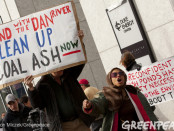
The two likely paths the North Carolina Supreme Court can take in the Cape Fear case, and the environmental implications of coal ash.
[...]
A unique glimpse into the prosecution of child abuse and the experience for a child witness.
[...]
Is the right to record police interactions protected by the constitution? If so, what are the policy implications of allowing citizens to press play?
[...]
Outgoing Editor-in-Chief Katherine Doering Custis reflects on the past year.
[...]
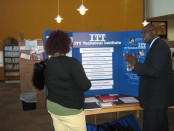
Campbell Law School's Intellectual Property Law Society hosted a Patent Law Symposium on April 10, 2015.
[...]
Clarke Wittstruck failed on multiple occasions to maintain, manage, and handle client funds. Wittstruck neglected client matters and communications, which caused his clients to suffer legal consequences, such as arrest. He changed the handling of his firm, and in the transition period, operated without support staff and accepted more work than he was able to handle. Wittstruck has been previously disciplined for other instances. The State Bar hearing committee suspended Wittstruck’s
[...]
«
1
…
44
45
46
47
48
…
85
»