The Shadow of Censorship: Are courts failing to shield free speech from government influence on social media giants?
Courts must evolve standing rules and state action doctrine thresholds to preserve trust in the digital landscape. Failure to adapt risks rendering the First Amendment obsolete amid proxy controls.
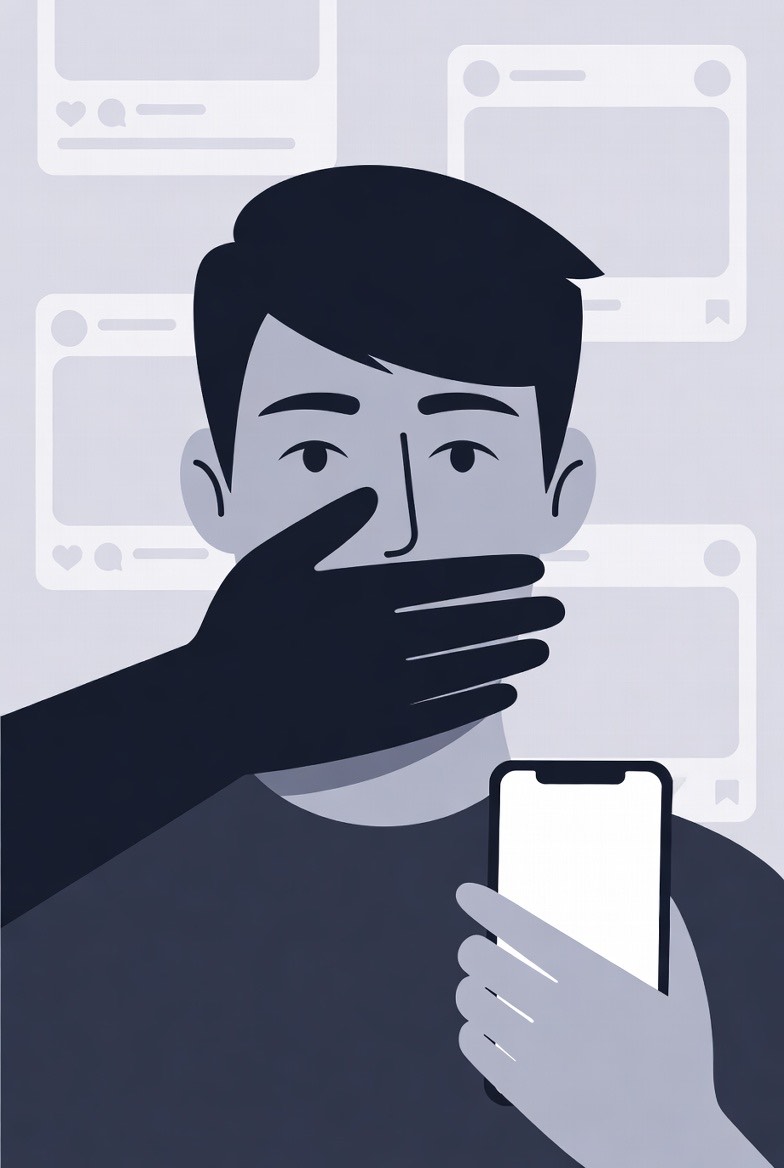
Today, digital platforms shape public opinion for billions, and the boundary between private content decisions and government-orchestrated suppression is growing increasingly thin. The Ninth Circuit’s 2020 ruling established that companies like YouTube operate free from First Amendment obligations as private entities. However, Mark Zuckerberg’s August 2024 letter to the House judiciary Committee revealed how the United States government exerted pressure on Facebook to censor posts, including humor and satire, that officials deemed problematic.
Further issues arise where officials engage in persistent communications with platforms to curb misinformation, as illustrated by Supreme Court cases such as Murthy v. Missouri. Meta’s November, 2025 win against the FTC in its antitrust case and rapidly progressing AI-driven moderation being utilized, courts appear ill-equipped to counter this indirect erosion of speech rights.
Understanding Prager University v. Google LLC and Barriers to Litigation
Prager University, a nonprofit media organization that produces educational content with conservative and Judeo-Christian themes about a wide range of topics from history to economics, filed suit against YouTube in 2017 after the platform restricted several clips and demonetized others. Prager University argued that these actions constituted viewpoint bias in violation of the First Amendment. Prager University also alleged that YouTube engaged in misleading advertising under the Lanham Act because YouTube frames itself as a public forum committed to neutrality.
The district court dismissed both claims, and the Ninth Circuit Court of Appeals affirmed, citing Manhattan Community Access Corp. v. Halleck. The Ninth Circuit held that private platforms do not become state actors merely by hosting public discourse under the state action doctrine. The Ninth Circuit stressed that content moderation falls outside functions traditionally reserved to the government such as elections and primary education. This precedent insulates platforms but opens the door to external pressures from state actors.
The state action doctrine requires clear governmental involvement to trigger First Amendment protections. Courts employ multiple tests such as the Public Function Test, used in PragerU v. Google LLC, to determine if the government is acting through a private party. The Public Function Test looks at whether a private party performs a function that is traditionally or exclusively reserved for the government.
Other tests include: the nexus test, the joint action test, and the symbiotic relationship test. Some courts utilize all four tests while highlighting the bounds of each, such as the Federal District Court of New Mexico in Keenan-Coniglio v. Cumbres & Toltec Scenic Operating Comm’n. The Nexus Test focuses on “when a state has exercised coercive power over the challenged activity,” while the Joint Action Test highlights whether state officials and the private party acted together to deprive an individual of constitutional rights.
Trouble also arises for plaintiffs as they try to prove standing. In Murthy v. Missouri, the Supreme Court in June 2024 reversed a lower court’s injunction against federal communications with platforms, citing the plaintiff’s lack of standing to bring a claim for direct harm from the content moderation. Justice Barrett noted challenges in finding causation amid independent moderation, but Justice Alito’s dissent highlighted relentless pestering as suppressive. These frameworks often falter in capturing nuanced influence, as Zuckerberg described officials expressing frustration and implying repercussions for non-compliance.
Current Media Control
Currently, there are a few dominant platforms that hold monopoly-like power over information flows, which increases the incentives for governments to intervene, as these companies hold great power to effect public discourse. Per a 2020 FTC complaint filed in December 2020, Meta controls over 70 percent of the United States social networking time, aided by the tech-giants subsidiaries, such as Instagram and WhatsApp. Alphabet also controls massive amounts of market share in long-form content through YouTube which boasts 2.74 billion users accessing the platform every month.
Concentration of control over social media fosters proxy censorship. For example, the Biden administration worked directly with social media companies such as Meta and YouTube to flag content for removal. By exploiting platforms’ regulatory fears, administrations can affect censorship through private companies. Courts address monopolies in antitrust contexts, like the now concluded Meta trial, but seldom connect them to speech implications. Failure to recognize the intersection of anti-trust considerations and speech can have detrimental effects on the rights of Americans, as seen by the United States efforts to ban TikTok based on security concerns.
Future Projections of Censorship
By late 2025 or early 2026, AI integration in moderation will likely continue to exacerbate content moderation concerns. The Reuters Institute’s 2025 Digital News report warns that AI chatbots curating feeds could embed biases if influenced by governmental datasets.
The Foundation for Individual Rights and Expression (FIRE) analysis from 2024 indicates an increase in litigation over content moderation, despite persisting barriers post-Murthy. The Global Expression Report 2025 findings show declining support for online freedoms around the world, with shutdowns and arrests rising in 77 countries, and only 4 percent of individuals across 15 countries have experienced improvements in their freedom of expression.
If judicial bodies continue to sidestep direct intervention, such as in Murthy v. Missouri, companies may decide to take it upon themselves to change things. Platforms could introduce a government moderation note in restriction messages to disclose when content takedowns result from official directives, a move aimed at rebuilding eroded user confidence amid ongoing scrutiny. A company that adopts policies like these would differentiate itself in a skeptical market.
Recent policy shifts among tech companies, including Meta’s January 2025 announcement that it would relax fact-checking and emphasize free speech, suggest a pivot toward self-imposed transparency tools to counter backlash from perceived overreach. This approach aligns with broader calls in congressional reports for incentivizing platforms to reveal external influences, potentially staving off stricter regulations while fostering trust.
Conclusion
Prager University v. Google LLC highlighted doctrinal limits on platform accountability, a vulnerability amplified by monopolistic structures, pressures revealed in Murthy v. Missouri, and Zuckerberg’s testimony. Existing tests for state action provide tools for courts but fail to consider continued whispers from government organizations into the content moderation policies of social media giants.
So far, the courts have favored corporate independence over robust speech safeguards. As AI and consolidation intensify, this reluctance endangers open discourse by allowing proxy government restriction on American citizen’s First Amendment rights. Courts must evolve standing rules and state action doctrine thresholds to preserve trust in the digital landscape. Failure to adapt risks rendering the First Amendment obsolete amid proxy controls.