
Adversity and Aftermath: A Look into the Response to Hurricane Helene’s Devastation
In the aftermath of an event like Hurricane Helene, drawing strength from the community is an idea that not only serves as the glue in rebuilding efforts but also as an inspiration to persevere through adversity.
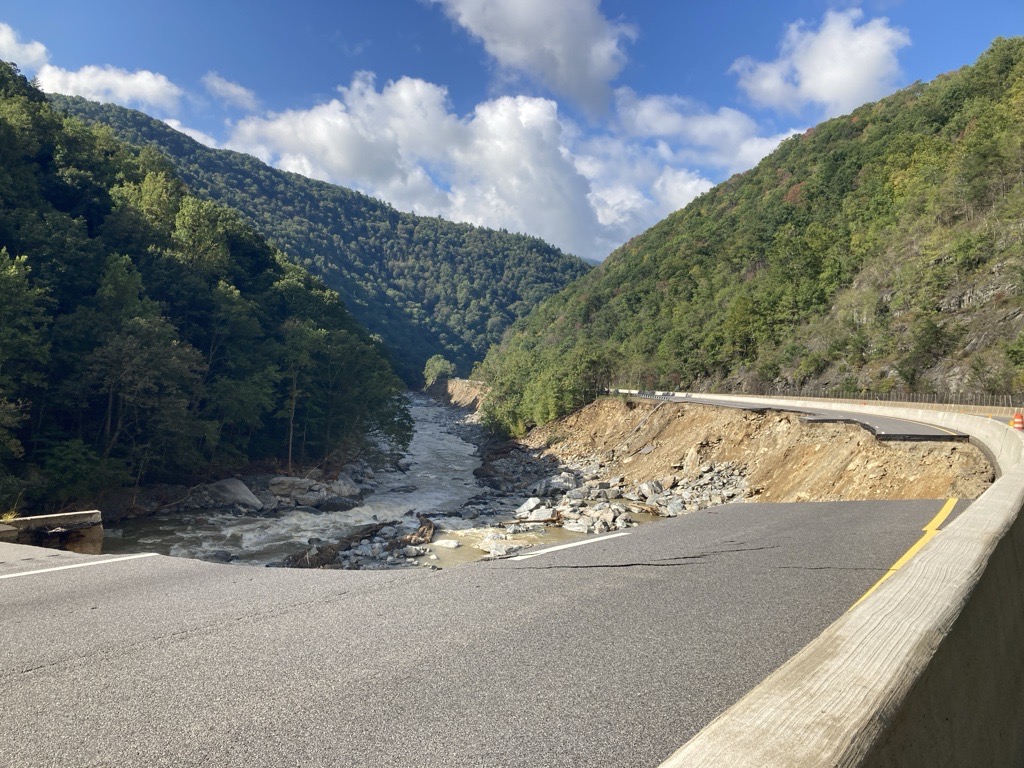
Picturesque Western North Carolina faced unprecedented danger and damage from Hurricane Helene’s heavy winds and rainfall. In late September 2024, Hurricane Helene made landfall in Florida before moving through the Southeast. Just a day after its landfall, Hurricane Helene arrived in Western North Carolina with extreme rain, wind, and tornadoes in tow and left behind a trail of destruction.
Hurricane Helene’s Deadly Nature and Costly Impact
Hurricane Helene’s landfall in Florida on September 26, 2024, led to what would become one of the deadliest hurricanes to hit the United States. However, its entrance into North Carolina less than 24 hours later led to what would become the most destructive hurricane to hit North Carolina. The combination of rain, wind, and Western North Carolina’s geographic features resulted in heavy flooding but also deadly landslides that harmed people and property throughout the region. In just two days, Western North Carolina faced over 30 inches of rain. Some floods, like those on Asheville’s French Board River, reached levels of almost 25 feet. Wind levels reached up to 100 miles per hour in some areas, even resulting in tornadoes. Western North Carolina, with its beautiful and mountainous terrain, became a dangerous sight for many, with the dangerous flooding and landslides resulting from Hurricane Helene.
A report released by North Carolina Governor Roy Cooper and the Office of State Budget and Management assessed the damage and needs of North Carolina following the hurricane. This report details the deadly nature and costly impact of Hurricane Helene, with over 100 confirmed deaths and damage to an estimated 73,000 homes. Hurricane Helene interrupted access to essential services and facilities, including sewage, water treatment, healthcare, and emergency services across Western Carolina. The damage to approximately 6,900 sites along North Carolina roads, including I-40, caused transportation and traffic closures across the state. According to former Governor Cooper’s report, the damage from Hurricane Helene resulted in an estimated $59.6 billion in damage and needs across North Carolina, especially in Western North Carolina.
Disaster Relief Efforts and Assistance
The President of the United States declared Hurricane Helene to be a Major Disaster, and the Federal Emergency Management Agency (FEMA) designated 39 counties for federal disaster assistance. Declaring an event such as a hurricane or earthquake to be a Major Disaster enables a wide range of federal assistance programs to provide individual and public assistance for those impacted by the hurricane. Once the President issues a Major Disaster Declaration, FEMA is obligated to coordinate the federal response to the disaster by providing resources and assistance before, during, and after the disaster. In Western North Carolina, FEMA’s response and assistance included transitional sheltering, debris removal, fraud and scam awareness, and prescription assistance. Another important resource FEMA provided for survivors of Hurricane Helene is the disaster recovery centers, which also help with applying for federal assistance.
Other organizations, such as Samaritan’s Purse, also assisted in the aftermath of Hurricane Helene, especially to communities that became difficult to access. Headquartered in Boone, North Carolina, Samaritan’s Purse provided communities with necessities like food and safe water in addition to generators, blankets, and other items. Samaritan’s Purse volunteers also participated in cutting fallen trees and tarping roofs, as well as clearing private roads.
Legal Community’s Response
Survivors of disasters like Hurricane Helene not only face physical consequences but also legal consequences. Some of these legal consequences include areas of the law like unemployment, insurance, mortgages and foreclosure, and fraud, among others. It can be difficult to process a disaster like Hurricane Helene while navigating these consequences and protecting their rights. Taking action, North Carolina’s legal community created the Disaster Legal Services program. This program is a partnership among the North Carolina Bar Association and Foundation, Legal Aid of North Carolina, American Bar Association, and FEMA to assist North Carolina residents affected by natural disasters.
The Disaster Legal Services program assists survivors affected by natural disasters in their legal needs. This program can provide legal assistance for disaster benefits, such as Disaster Unemployment Assistance. For the individuals who have experienced damage to their homes, this program provides assistance with home repair contracts, contractor disputes, and contract fraud. For individuals whose important legal documents were destroyed in the disaster, the program can assist with replacing these documents, such as wills and advance directives. The Disaster Legal Services program also provides legal assistance with insurance, mortgage, foreclosure, and landlord-tenant matters.
One service organized by the Disaster Legal Services program is a legal aid hotline for low-income survivors of Hurricane Helene in North Carolina to call regarding disaster-related legal questions or request assistance. Although there are some limitations, lawyers volunteer to provide free legal services to survivors. Following the North Carolina Supreme Court approval, the North Carolina State Bar instituted a temporary rule allowing lawyers not licensed in North Carolina to provide pro bono legal services to victims of Hurricane Helene. The Disaster Legal Services program and its partners provide opportunities for assistance, as well as resources and information on topics such as the rights of survivors and long-term recovery from the impacts of Hurricane Helene.
Other groups and institutions, such as Campbell University, also provided resources for Western Carolina after Hurricane Helene. Campbell University, including Campbell University School of Law, organized a supply drive to gather and send needed supplies and aid to Western North Carolina. In partnership with Baptists on Mission, this drive delivered essential items such as garbage bags, baby wipes, and paper products, among other necessities, to the communities in Western North Carolina.
Hope After Helene
In the wake of deadly disasters like Hurricane Helene, there are often injuries, damage to the environment, and a sense of adversity. Such an event uproots entire lives, businesses, and communities leaving lives changed forever. As the most destructive Hurricane in North Carolina’s history, Hurricane Helene changed the state of North Carolina, leaving behind damage, debris, and a drive to rebuild.
Western North Carolina Strong, or WNC Strong, is a partnership among organizations collaborating on the rebuilding efforts of Western North Carolina. These efforts include supporting small businesses, raising money, and providing resources for small business owners. With billions of dollars in damage caused to North Carolina, the path to recovery may seem like a long and difficult one, but WNC Strong also promotes long-term efforts focused on infrastructure and recovery.
In the aftermath of an event like Hurricane Helene, drawing strength from the community is an idea that not only serves as the glue in rebuilding efforts but also as an inspiration to persevere through adversity. Hurricane Helene caused immense damage and brought together federal, state, and local organizations in support of recovery and rebuilding efforts. These organizations provide a means to reinforce the s importance of community and to facilitate recovery from disasters together. The road to recovery may be long and difficult, but the commitment of governments, groups, and individuals to work together as a community toward rebuilding and revitalizing those impacted offers a means of hope after Helene.