
“The longstanding impacts on legal aid could be as severe as reducing low-income families’ access to representation and necessary resources.”
President Trump’s budget cuts for the 2026 fiscal year could dismantle the Legal Services Corporation (LSC), which provides representation to millions of low-income individuals and families across the United States. The legal representation and resources provided by the LSC, now severely limited, may leave Americans across the country to deal with legal matters on their own. Such matters include evictions, domestic violence, and medical debt. The longstanding impacts on legal aid could be as severe as reducing low-income families’ access to representation and necessary resources.
What is the Legal Services Corporation?
The Legal Services Corporation (LSC) is the largest funder of civil legal aid in the United States. The LSC was established by Congress with the support of the Nixon administration and funded through congressional appropriations. Since the LSC’s founding in 1974, the program has provided grants to fund legal assistance benefiting low-income individuals. The LSC has a bipartisan Board of Directors, made up of 11 members who are chosen by the President and confirmed by the Senate. Founded in 1974, the LSC’s budget would equal about $880 million today and served fewer than thirty million low-income Americans. Over time, as the American population and need for legal services have grown, LSC’s budget has constantly fluctuated. The LSC began as a small organization that served a few non-profit legal organizations. Fifty years later, it funded major programs across the United States.
The LSC reports that, before 2025, it distributed over ninety-five percent of the funding it receives to 130 independent nonprofit legal aid programs across the country. Those services benefited more than five million low-income individuals per year across the United States. Importantly, the LSC reported involvement in urgent legal cases where individuals could “lose their homes, income, healthcare, custody of their children or an order of protection from an abuser.”
President Trump’s Big Beautiful Budget Cut
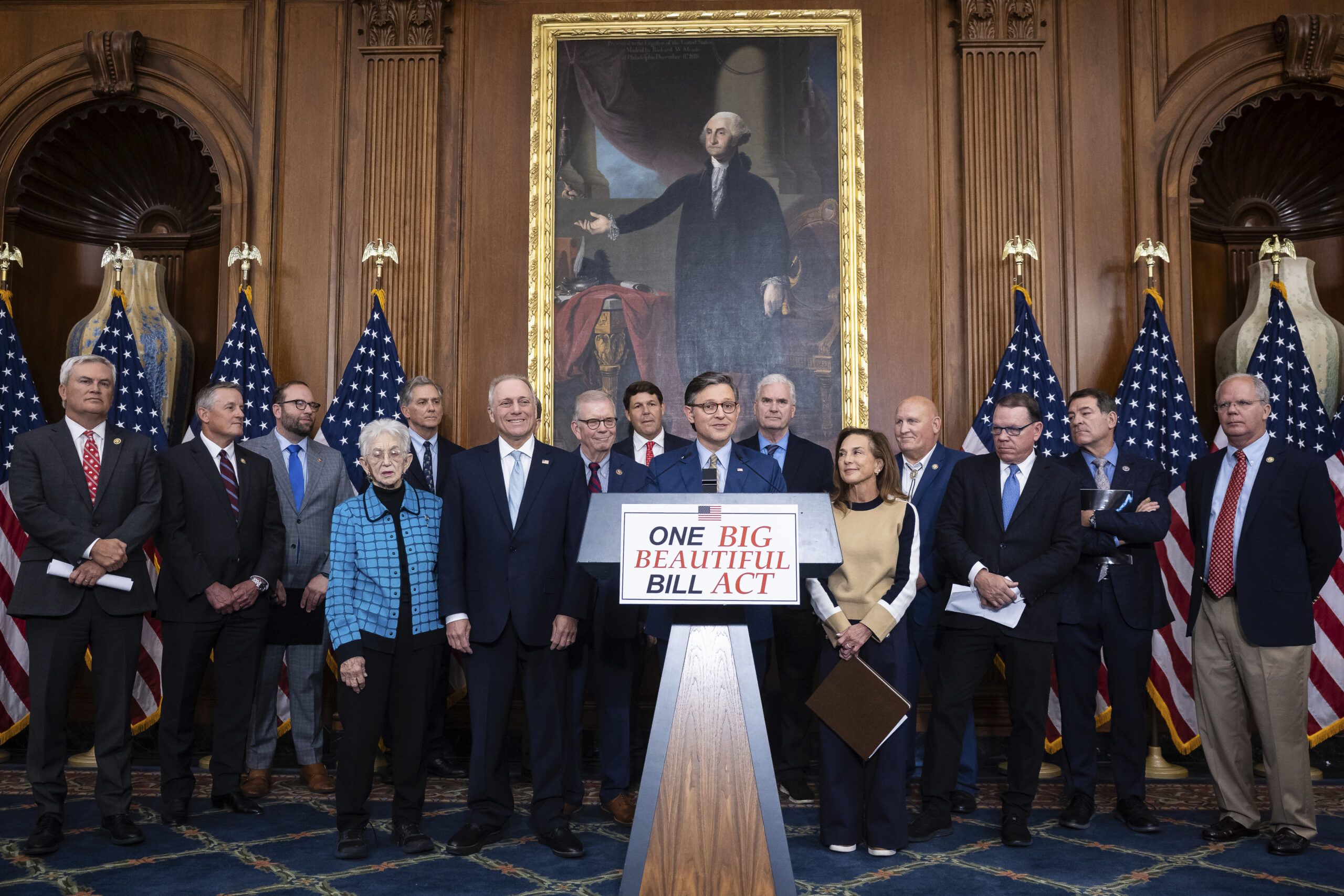
President Trump’s Big Beautiful Bill has revived concerns that the LSC may be dismantled. The bill restricted funding to programs across multiple fields, which could impact communities nationwide. Particularly, regarding civil legal aid, the Big Beautiful Bill reduces funding for American legal aid programs and the pro bono services they provide, threatening the programs’ long-term viability.
The One Big Beautiful Bill Act for the Fiscal Year of 2025-2026 discusses the appropriation of funds for the Office of Management and Budget. Under Title IX Subtitle B Section 90103, Congress states that in addition to amounts that might otherwise be available, the Office of Management and Budget is allocated “$100,000,000 to remain available until September 30, 2029, for purposes of finding budget and accounting efficiencies in the executive branch.” This is a broad appropriation of funds to the Office of Management and Budget, approved by Congress.
The Office of Management and Budget 2026 Appendix explains that President Trump proposed the elimination of Federal funding for the LSC to encourage national “fiscal responsibility” and “redefine the proper role of the Federal Government.” The 2026 Appendix for President Trump’s budget asked for an “orderly closeout” of the LSC, requesting $21 million in order to close out the program. The 2026 Appendix reflects the Trump Administration’s decision to direct funds from the One Big Beautiful Bill Act to the Office of Management and Budget for spending. The $21 million budget is a major funding cut compared to the $2.1 billion budget LSC requested for this year. The outcomes of President Trump’s proposals—and particularly their impact on the LSC—have yet to be seen.
Failed Attempts at the Legal Services Corporation’s Demise
Over the years, the LSC has faced numerous attempts at its demise between transitions of power. Presidents since the LSC’s founding have varied in their support for the corporation; however, the LSC continues to provide various resources and other aid to legal services. During President Ronald Reagan’s presidency, the LSC faced a twenty-five percent cut to its funding in an attempt to completely eliminate the program. President Reagan was sincere in his attempt but ultimately failed to abolish the program. However, Reagan was partially successful by obtaining severe cuts to the LSC’s funding from Congress.
In 1994, when both the House and the Senate were under Republican control, the Legal Services Corporation was once again under attack. The Speaker of the House at the time, Newt Gingrich, and his cohorts attempted to successfully abolish the program, but failed. However, while the attacks might have failed, the program’s funding was cut and restricted, leaving lasting effects on the efficiency and abilities of the program.
The 2026 budget cut is not President Trump’s first attempt to dismantle the LSC program. In President Trump’s 2018 budget proposal, he attempted to dissolve the LSC during his first term. The President called for the end of a “one-size-fits-all model of providing legal services through a single federal grant program” to give state and local governments more control, Bloomberg Law said. Throughout the years, it has been a growing trend for Republicans to advocate against the continued funding of the LSC.
One contributor to the LSC’s opposition is the Heritage Foundation. In October of 1995, the Heritage Foundation released an article titled “Why the Legal Services Corporation Must be Abolished”. The report from 1995 states that the legal groups that receive funding from taxpayers around the country have engaged in political, lobbying, and cause-advocacy activities that are at the expense of providing legal services to the individuals who need their support. Ultimately, the dispute centers on how taxpayers’ dollars should be spent.
Further, the Heritage Foundation’s article argues that the LSC is promoting welfare dependency, helping to destroy public housing, undermining family dynamics, promoting illegal immigration and racial preferences, and assisting criminals. Additionally, the Heritage Foundation identifies a lack of accountability regarding the use of taxpayer funds that were given to the LSC. President Trump has a similar concern with the use of federal funding to support the LSC today, arguing that the LSC’s federal funding should be replaced by funding from state and local governments.
Is the Big Beautiful Budget Cut Really Beautiful or Just Big?
Leadership within the Legal Services Corporation, partnering legal aid offices, and the broader community are reacting to the 2026 budget cuts. Despite this not being the first attempt to defund the LSC, a sense of dread, disappointment, and concern is growing with the preconceived outcomes that could leave low-income individuals without support and push them further from valuable resources.
In an article from the Legal Services Corporation, its President, Ron Flagg, states that the justice system in our country was built for lawyers and that it is “too often true that there is no hope of accessing justice when legal problems arise for the 52 million Americans who qualify for LSC-funded services and have no means to afford an attorney.” The pressing issue of allocating resources to the millions of low-income Americans who need them intensifies with Trump’s budget for the fiscal year. Ron Flagg further emphasizes that the effects of the budget cut are predicted to have the strongest impact on rural communities across the country, particularly in southern states.
John Levi, who served as the Chairman of the US Legal Services Corporation in the past, has expressed concern for the future of the American justice system. Mr. Levi, writing for the International Bar Association, states that he believes dissolving the Legal Services Corporation would be a “devastating blow to the orderly functioning of our justice system.” Further, Mr. Levi explains that it is becoming more common for people to try representing themselves alone, and that the justice system is not set up for individuals to “go-it-alone.” Without the support from the LSC, legal support centers and programs across the country could shut down or scale back services. The cuts could increase the risk that individuals who are not equipped to represent themselves will be further excluded from accessing legal representation and resources.
Many of the Legal Service Offices are commenting on how the cuts will limit the support, resources, and representation available to families that rely on legal aid services. The Executive Director of the Southeast Louisiana Legal Services, Laura Tuggle, explains in an article with Bloomberg Law that dismantling the LSC would cause “catastrophic impacts” for the clients seeking aid from the services provided in Louisiana. Louisiana currently receives forty percent of its funding for the Southeast Louisiana Legal Services from the LSC, which is still providing support to the community recovering from Hurricane Katrina.
Moreover, the 2026 budget cuts could put funding for legal aid services in North Carolina communities at risk. Legal Aid of North Carolina Executive Director Ashley Campbell explained that, without the LSC, fifty percent of the legal aid in North Carolina would be at risk of limitations on funding. Specifically, Ashley Campbell points towards the lingering effects of Hurricane Helene and how the budget would impact the western part of North Carolina as the communities seek further support. Legal Aid of North Carolina already closed offices in Rocky Mount and Pembroke because the North Carolina General Assembly did not award IOLTA grants until mid-2026. Thus, the potential implications of Trump’s budget cuts could be detrimental if not replaced by state funding.
Future Implications
Considering the budget cuts for 2026, the future of the Legal Services Corporation and its affiliates may look dim. Some Americans are concerned that, in the absence of LSC funding to legal aid providers across the country, providers will be forced to decrease programs, limit staff, and close clinics. All of these provide valuable legal resources, and budget cuts would ultimately turn away clients who have urgent legal issues.
Meanwhile, in early 2025, the Legal Services Corporation reported that letters from external stakeholders have called for Congress to provide funding for the 2026 fiscal year. These letters include one from leaders of U.S. law firms across the country, another from bipartisan state attorneys general, and another from bipartisan chief justices of state Supreme Courts. President of the LSC, Ron Flagg, states that Congress in the past has acknowledged civil legal aid is “not a partisan issue, it is about fairness and effectively-functioning the justice system” and further that “[w]hen legal aid is present, justice is faster, fairer, and more consistent.” It seems that despite the possibility of the destruction of the LSC, legal aid organization leaders are hopeful that Congress will resume funding the Legal Services Corporation, as they have in the past.
