
How recent court decisions may impact the purchase process for firearms and the current Second Amendment landscape.
Introduction
The National Firearms Act (“NFA”) was enacted in 1934 as a taxation and registration system governing the making and transfer of certain firearms. Firearms covered by the NFA include short-barreled shotguns (“SBS”), short-barreled rifles (“SBR”), weapons classified as “any other weapons” (“AOW”), machine guns, destructive devices, firearm mufflers, or silencers. Purchasers of these items were required to: submit ATF Form 4; provide fingerprints and a photograph; register the item with the Bureau of Alcohol Tobacco, Firearms and Explosives (“ATF”); pay the applicable transfer tax; and receive ATF approval before taking possession. Before 2026, the transfer tax was generally $200 for all these items except AOWs, which had a five-dollar tax. However, following the consolidated cases of Silencer Shop Foundation v. ATF and Jensen v. ATF, the purchase process has changed for some purchasers.
These cases arose after Congress reduced the NFA’s making and transfer taxes to zero dollars for suppressors, SBRs, SBSs, and AOWs, effective January 1, 2026, but left the registration and other requirements in place. The zero-dollar tax rate was not extended to machine guns or destructive devices. On August 5, 2026, the United States District Court for the Northern District of Texas held that the challenged registration requirements exceeded Congress’s enumerated powers because they were enacted to support taxes that no longer generated revenue. The court permanently enjoined ATF from enforcing those provisions against the plaintiffs, their members, current customers, and future customers.
The result of these decisions is that there are now two different methods for purchasing suppressors and AOWs. Whether purchasers may use the ordinary Form 4473 process or must continue using ATF Form 4 depends on several factors including the purchaser’s state, the company selling the item, and whether the dealer was one of the named plaintiffs.
Why the Court Found the Requirements Unconstitutional
Congress may exercise only those legislative powers that the Constitution grants it. Congress used its power to lay and collect taxes to enact the NFA. In Sonzinsky v. United States, the Supreme Court upheld the NFA’s tax because it produced revenue and was therefore a valid exercise of Congress’s taxing power. Even though the NFA regulated certain firearms, it was constitutionally acceptable because it generated tax revenue.
In Silencer Shop Foundation and Jensen, the government argued that the NFA was still constitutional because it continued to impose taxes on machine guns, destructive devices, as well as special occupational taxes on dealers, manufacturers, and importers. The court found that these other revenue sources could not support the registration and approval requirements for the firearms on which Congress had eliminated the making and transfer taxes.
The government also argued that the commerce clause provided an alternative basis allowing Congress to impose requirements on these firearms. However, the court found that the text of the NFA and its legislative history showed that Congress initially enacted the provisions under its power to lay and collect taxes, not the commerce clause. Therefore, the government could not retroactively justify these provisions under a constitutional power that Congress did not invoke when it enacted them.
The plaintiffs argued that the requirements of the NFA violated the Second Amendment, but the court did not decide the issue because the plaintiffs prevailed on their enumerated-powers claims. The decision does not hold that the NFA or its requirements violate the Second Amendment.
Who does the Injunction Protect?
The court here found that the challenged NFA provisions were unconstitutional; however, it was unable to apply the injunction nationwide because “[f]ederal courts lack power to issue universal injunctions that provide relief to parties not before the [c]ourt.” As a result, the injunction is limited to the individual and commercial plaintiffs, the organizational plaintiffs, their current and future members, and certain current and future customers. The court extended the injunction to the commercial plaintiffs’ current and future customers because allowing enforcement of the NFA provisions against them would perpetuate the financial injuries already suffered by the commercial plaintiffs.
This injunction only protects customers in the course of qualifying transactions with a covered plaintiff or commercial member of an organizational plaintiff. Customers cannot rely on the injunction for all NFA firearms that they possess, make, sell, or transfer. Further, even though fifteen states participated as plaintiffs, the injunction only protects those states, their agencies, and their political subdivisions. Residents of those states are not automatically protected because they live within the state.
What the Decision Means for Purchasers
This decision has already affected how some suppressors and AOWs are purchased. To implement the injunction, Silencer Shop has divided states into three categories based on whether the state law allows transfers without the traditional NFA process. According to Silencer Shop, twenty-seven states are “Free States,” fifteen states are “NFA States,” while eight states and Washington, D.C. are “Banned States.”
In the twenty-seven Free States, suppressors and AOWs from Silencer Shop may be transferred without filing ATF Form 4. Instead, purchasers in these states complete ATF Form 4473 and undergo a National Instant Criminal Background Check before taking possession. Purchasers are not required to submit fingerprints or a photograph, register through the traditional NFA process, or wait for ATF approval. Individual dealers in these states may continue using ATF Form 4 due to uncertainty about the injunction and lack of guidance from the ATF.
In the fifteen “NFA States,” including North Carolina, state law continues to require compliance with the NFA process for certain items. For example, North Carolina law prohibits a person from possessing or purchasing a suppressor unless the person complies with the NFA. Therefore, purchasers in the fifteen NFA States continue to use ATF Form 4 even if the dealer is covered by the federal injunction.
Finally, “Banned States,” the remaining eight states and Washington, D.C., prohibit suppressors entirely under state or local law. The injunction does not address these provisions but instead only addresses ATF enforcement of federal provisions. Therefore, purchasers in these jurisdictions remain unable to acquire suppressors at all.
What the Decision Does Not Change
First, this decision does not invalidate the entire NFA because Congress did not specifically reduce the making and transfer taxes for machine guns and destructive devices. Accordingly, the injunction does not affect purchases of these firearms. Furthermore, the injunction only applies to the specific parties and the statutory and regulatory provisions that the court identified in its final judgment. Other federal and state firearm restrictions remain intact.
Second, the judgment does not affect the sale of SBRs and SBSs in the same manner. The court enjoined the NFA provisions that applied to these firearms; however, the Gun Control Act prohibits a federally licensed dealer from selling or delivering an SBS or SBR without approval from the attorney general. This provision was not part of the injunction. Thus, purchasers of these items continue to use ATF Form 4 for transfers of these items in states where these firearms are legal.
Third, this decision did not eliminate the standard background check generally required anytime a firearm is purchased from a federally licensed dealer. Purchasers who fall under the injunction must still complete ATF Form 4473 and pass the instant background check. The immediate changes implemented by the order apply primarily to suppressors and AOWs, not every firearm covered by the NFA.
What Happens Next?
The court stayed its judgment for seven days to allow the government the opportunity to seek appellate relief before the injunction went into effect. The government did not seek appellate relief, and the injunction went into effect on August 13, 2026. President Trump ordered the Department of Justice not to appeal. The Department of Justice stated that the ATF would issue guidance on how it would implement the order.
On October 9, 2026, the ATF issued guidance announcing that it would no longer require prior NFA approval or registration for SBRs, SBSs, silencers, and AOWs. Although the injunction protects only the plaintiffs and other specified persons, the ATF extended its nonenforcement policy to everyone otherwise subject to those requirements. This policy therefore allows purchasers outside the injunction’s protection to acquire these items without the traditional NFA process.
The ATF’s guidance reduces uncertainty at the federal level but leaves significant questions in states where purchasing and possessing these items requires federal registration or compliance with federal law. The ATF will continue to accept registrations, which remains important for these states. Some federal uncertainty remains, however, because the ATF’s guidance does not repeal the NFA; it reflects the ATF’s decision not to enforce these specified provisions. A future administration could rescind that policy, potentially exposing purchasers outside the injunction’s protection to enforcement for continued possession of unregistered items. While this policy makes purchases easier today, purchasers and dealers must still consider the applicable state laws and the potential consequences of relying on an enforcement policy that could change.

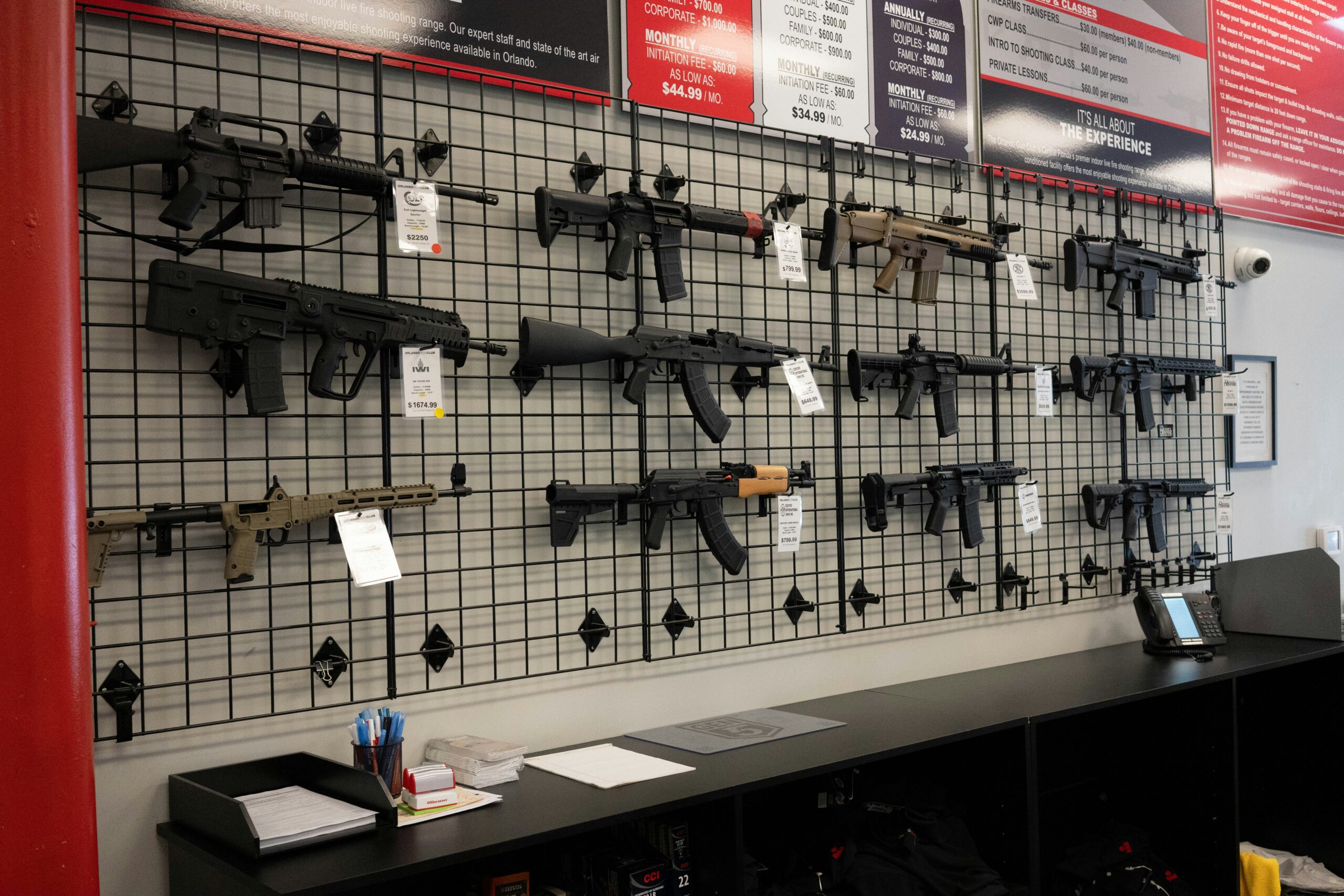
Photo by Gary Walker-Jones on Unsplash