

Opinion | When Local Journalism Changes the Law
While national media highlights the allegations against Cornell’s Chi Phi fraternity, local reporting demonstrates how sustained journalism can uncover legal gaps and prompt legislative reform.
While national media highlights the allegations against Cornell’s Chi Phi fraternity, local reporting demonstrates how sustained journalism can uncover legal gaps and prompt legislative reform.

Aaron M. Spitler, a researcher in technology and society, discusses the emerging phenomenon of AI griefbots and how policymakers should respond.

Dean J. Rich Leonard discusses his initiative in creating the Joseph E. Zaytoun International Judicial Clerkship, a program that sends American law students to serve in African appellate courts.

As long as core educational benefits reach every student and tuition remains as low as practicable, the command is satisfied. North Carolina’s approach reaffirms higher education as a fundamental benefit, which is provided to citizens to the fullest extent possible.

Protecting the digital child requires a coordinated global response that mirrors the global reach of major technology companies. Only through such mechanisms can children’s data-privacy rights evolve from aspirational norms into enforceable guarantees.
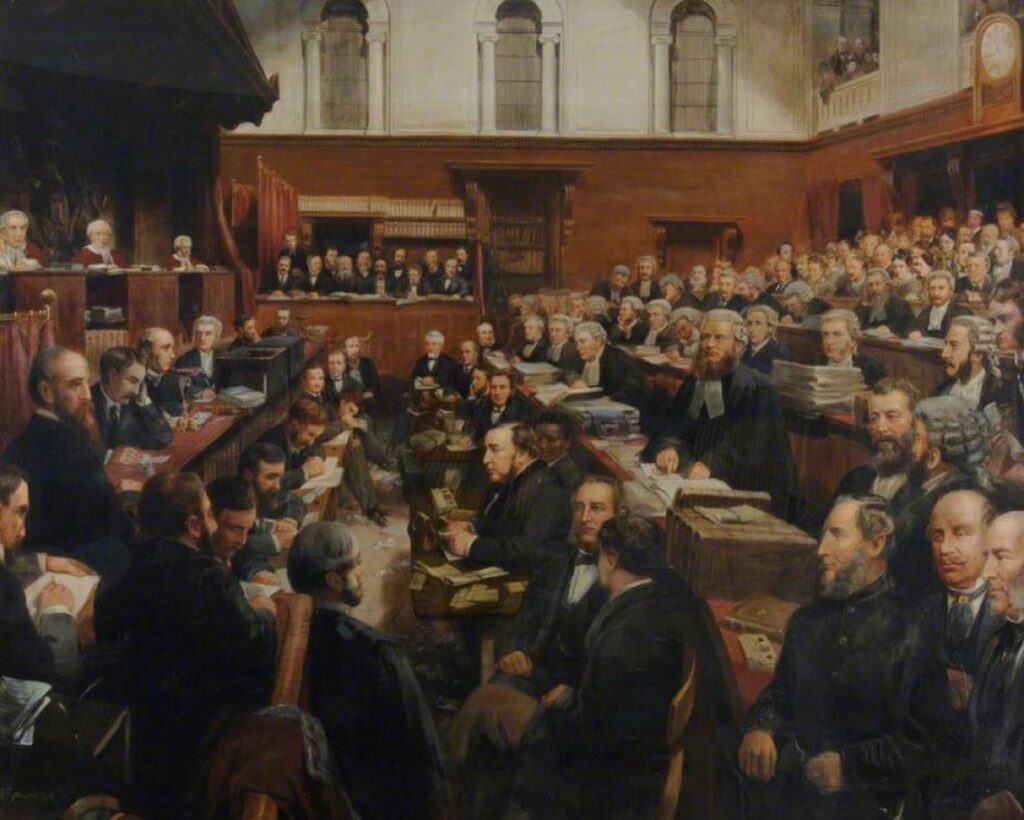
Judicial infrastructure is not equipped to manage an AI generated caseload. And Judges should not bear the burden of sifting legitimate, well-contemplated complaints from those generated on a whim. Protections against AI complaint generation and filing must be erected, for the good of the legal system and beyond.

Estate planning is a very rewarding but often overlooked area of the law because students have not encountered it or because they have not been dispelled of misconceptions regarding what it is actually like. Ultimately, trusts and estates is not a static or purely technical field, but a dynamic and expanding practice that is one of the only areas capable of keeping pace with real societal changes, unlike other areas for whom the wheel of justice turns slowly.

In recent months, armed and masked federal agents have roamed the streets of Charlotte, Durham and Raleigh, conducting what many describe as a “dragnet” of our communities. From smashing car windows to dragging workers out of their places of employment, the Department of Homeland Security’s (DHS) “Operation Charlotte’s Web” has left a trail of trauma across North Carolina.

How this case is decided could redefine the balance between government regulation and economic freedom in North Carolina’s healthcare system. Singleton is not just a dispute between a doctor and the State. It represents an issue with broad consequences on North Carolina’s economy and healthcare system.

What intestacy defaults and land-record systems teach us about marketability, stability, and title integrity. Photo by Erin Abbott When a

An increasing number of attorneys are integrating bankruptcy law and estate planning into their own practice in response to the need for stronger asset protection and the growing complexity of financial circumstances, especially during economic downturns and times of economic stress.

Restorative approaches put relationships first, helping families resolve conflict and repair harm in ways the courtroom can’t.

Early this year, Alabama joined a growing number of states that have authorized the death penalty for certain sex crimes against children. Florida, Tennessee, Idaho, Oklahoma, and Arkansas have enacted similar legislation, signaling a broader movement to expand capital punishment beyond homicide.

“The longstanding impacts on legal aid could be as severe as reducing low-income families’ access to representation and necessary resources.”

Dissents now cut like the thrust of a bayonet rather than a surgeon’s scalpel. Below are just a few examples of how bombastic and inappropriate rhetoric has eroded the perception of legitimacy of the courts. Ultimately, it is crucial that future judges and law clerks, simply, do not write like a Dick*.