
A Recent Case of AI Psychosis
Examining the Tragic Case of Jonathan Gavalas and the Growing Legal Debate Over AI Psychosis and Product Liability.
Examining the Tragic Case of Jonathan Gavalas and the Growing Legal Debate Over AI Psychosis and Product Liability.
Aaron M. Spitler, a researcher in technology and society, discusses the emerging phenomenon of AI griefbots and how policymakers should respond.
Protecting the digital child requires a coordinated global response that mirrors the global reach of major technology companies. Only through such mechanisms can children’s data-privacy rights evolve from aspirational norms into enforceable guarantees.
Lawyers should use GAI as another tool to advocate zealously for their clients. However, engaging with AI to assist with estate planning by lay people and legal professionals alike should be handled with judiciousness.
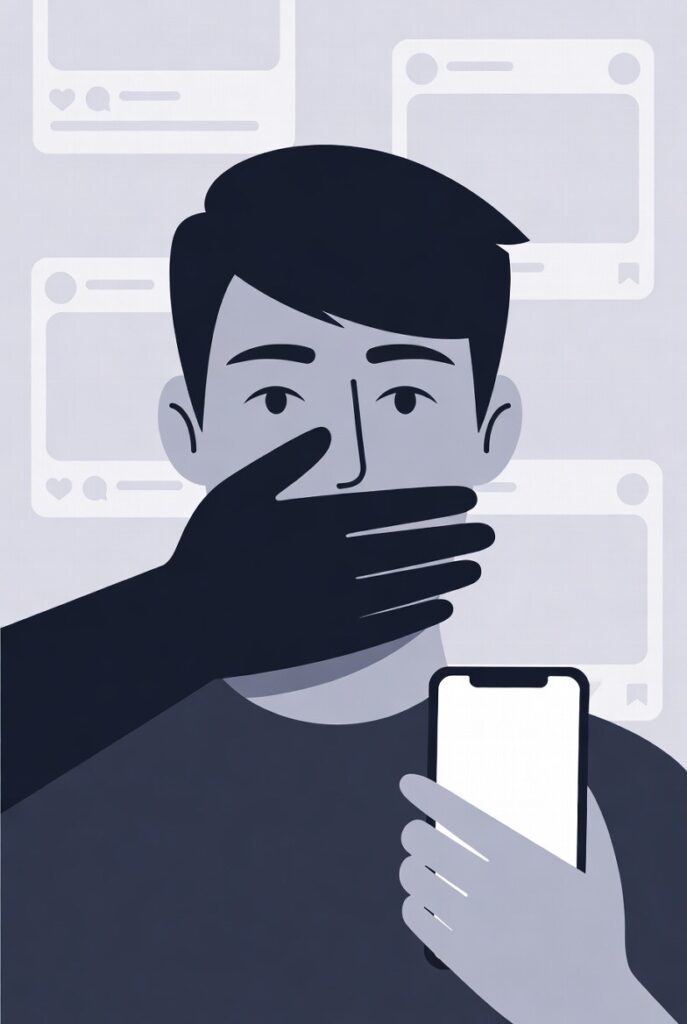
Courts must evolve standing rules and state action doctrine thresholds to preserve trust in the digital landscape. Failure to adapt risks rendering the First Amendment obsolete amid proxy controls.

Access to a legal database is essential to a lawyer, as lawyers must consult case law, statutes, and secondary sources to represent a client efficiently. Read for a comparison of the top two competing databases.

Penalties for committing a crime included in the CFAA range from imprisonment for less than a year to a maximum of life imprisonment. However, it is often difficult for the government to pinpoint the exact identity of cybercriminals to bring them to justice, especially if they are located in a different country.

The editing of genome cells is used in a number of ways, including treating and preventing hereditary diseases. A first case look includes a “brave” scientist by the name of He Jiankui of Shenzhen, China’s Southern University of Science and Technology, shocked the world by unveiling his unique experiment where he secretly modified the embryos of nine different couples who had biological fathers with HIV positive genes and mothers with HIV negative genes.
OpenAI, the company behind ChatGPT, has a list of activities that are banned, with the risk of termination of a user’s account if the company discovers banned activity. Within these banned activities, OpenAI specifically prohibits academic dishonesty. The regulation instructs its users not to misinform, misrepresent, or mislead others.

Tracing ChatGPT back to its conception, the core of the programming was always the Language Learning Model. By being able to access and compress a large number of data points into a uniquely generated output mimicking speech patterns, chatbots seem to be a supreme combination of search engines and research tools.

As federal policymakers research and draft data privacy legislation for the entire country to follow, there is tension between these state acts and the federal government’s plan for the future of data privacy in America.

The nuance between different subsets of AI is important when considering its implications. Just as important as it is to know what AI can do, it is equally important to recognize how AI has its risks.

What do an electric car company, a space exploration company, and a blue bird social media company all have in

One core subject every law student learns in their Civil Procedure course is “personal jurisdiction.” “Personal jurisdiction is the power

Are the 474 defendants charged with crimes for COVID-19 fraud schemes and the 1,686,121 reports of identity theft in 2021