The perp walk has become as common as the courthouse steps. A defendant is shackled, handcuffed, and marched past cameras. Before prosecutors present any evidence, the public sees a defendant as already guilty. This practice undermines one of our legal system’s longstanding principles: the presumption of innocence and the right to a fair trial.
Famously associated with the New York Police Department (NYPD), a perp walk (short for “perpetrator walk”) is the practice of law enforcement publicly walking an arrested suspect on the way to or from the courthouse or police station. For law enforcement, it gives off the impression that they are being proactive. For the media, it’s another headline and a chance to capitalize on the true crime frenzy gripping the nation. For the suspect, it places them under public scrutiny. The intersection between law enforcement, the media, and public perception can have long lasting effects that can detrimentally affect the presumption of innocence and ultimately may impact the defendant’s trial.
Luigi’s Perp Walk
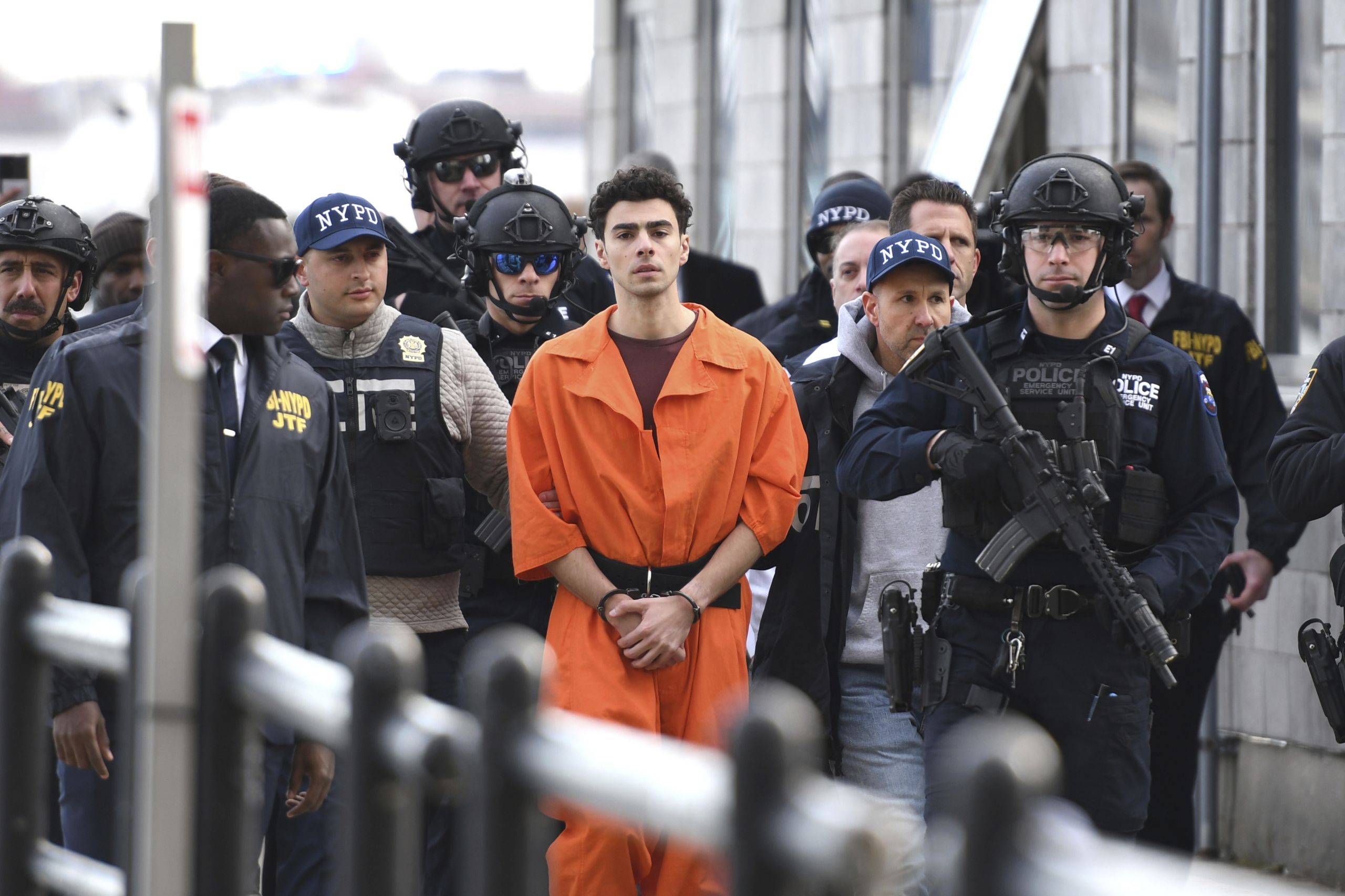
Luigi Mangione’s arrest and subsequent perp walk in December 2024 embodied the troubling intersection between media and law enforcement. Accused of fatally shooting UnitedHealthcare CEO Brian Thompson in Midtown Manhattan, Mangione’s case quickly garnered national attention. In addition to the public attention surrounding the severity of the crime and Mangione’s good looks, the public was captivated by the way New York city authorities presented Mangione to the world.
After being transported from Pennsylvania to New York, Mangione was very publicly perp walked from the helicopter landing pad to the Manhattan federal courthouse. Along the way, Mangione was joined by the New York Police Department, Federal Agents, and interestingly enough, Mayor Eric Adams. According to Mangione’s attorney, the walk portrayed her client as a “spectacle” and was “political fodder.” In response, Mayor Adams stated that he “wanted to show he was leading from the front.” Ironically, Mayor Adams faced his own federal indictment in front of the same magistrate judge as Mangione several months earlier.
The Effect
Despite NYPD’s attempt to criminalize Mangione, their plan backfired. Rather than reinforcing the image of criminality, the highly staged perp walk drew attention to his appearance and demeanor, turning Mangione into a “digital folk hero.” Most individuals do not make a good impression during a perp walk which is typically designed to convey custody, control, and culpability rather than to preserve the individual’s appearance or dignity. However, the exact opposite happened to Mangione. Images from the walk quickly gathered the public’s attention, creating memes and online discourse across TikTok and other social media platforms. Instead of focusing on the details of Mangione’s case, online discourse turned Mangione into a pop-culture figure and an anti-establishment symbol.
Mangione’s perp walk shows that publicly displaying a suspect before trial threatens the fairness of the trial itself. With Mangione’s photos circulating online, empaneling jurors who have not been exposed to or influenced by the social media narrative will be challenging. Likely, the jurors who serve during Mangione’s trial will have already developed some opinion about the case. Regardless of whether a juror has been exposed to media that supports or condemns Mangione, the impartiality of the juror is compromised because of external influences.
However, nationally recognized personal injury attorney John J. Perlstein disagrees. He notes that “potential jurors have always had access to news and the opinions of others, ultimately shaping their own. It is still incumbent upon the lawyers in the courtroom to ensure that a fair and impartial jury is impaneled.”
But Mangione’s attorney, Karen Friedman Agnifilo, says that Mangione’s case is different. During the December 23, 2024 New York Supreme Court hearing, Agnifilo raised serious concerns about Mangione’s right to a fair trial:
“He was on display for everyone to see in the biggest staged perp walk I have ever seen in my career. It was absolutely unnecessary. There was no reason for the NYPD and everybody to have these big assault rifles, that frankly I had no idea was in their arsenal. And to have all of these the press there, the media there, it was like perfectly choreographed. And what was the New York City mayor doing at this press conference, your Honor? That just made it utterly political.”
Agnifilo further went on to argue that the staged perp walk was unconstitutional. Lauro v. Charles has long held that perp walks with no legitimate law enforcement purpose “exacerbates the seizure of the arrestee unreasonably and therefore violates the Fourth Amendment.” Agnifilo asserts that there was no law enforcement objective and the perp walk was an attempt to detract from Mayor Adam’s “own issues.”
Mangione’s perp walk illustrates that law enforcement publicity can undermine constitutional protections. What should have been a routine transfer became a highly choreographed public spectacle, one that shaped public perception before any evidence was presented in court. As images of Mangione’s perp walk quickly spread online, any chance of a fair trial drastically decreased.